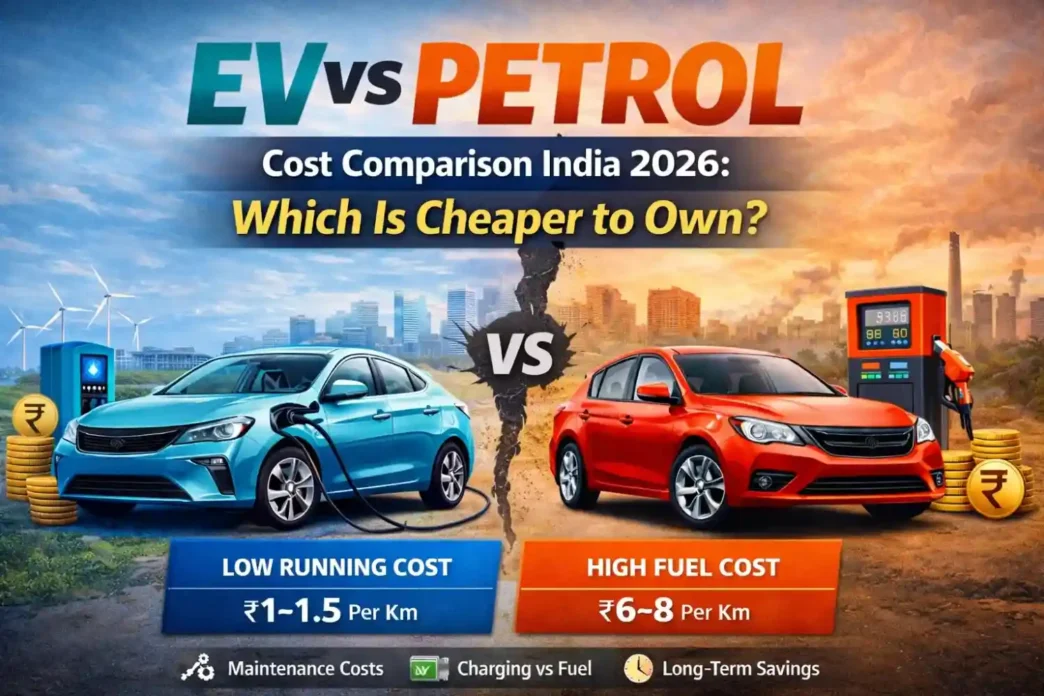
EV vs Petrol Cost Comparison India 2026 explained with real running cost, maintenance, charging vs fuel and long-term ownership to help buyers choose smartly.
Buying a car in India in 2026 is no longer just about looks, brand, or engine power. The real question buyers are asking today is simple but powerful: Which car will cost me less in the long run—EV or petrol?
With fuel prices staying unpredictable and electric vehicles becoming more common on Indian roads, the debate around EV vs Petrol Cost Comparison India 2026 has never been more relevant. Some people believe EVs are expensive toys for the rich, while others say petrol cars are slowly turning into money-burning machines.
So what’s the real story?
In this detailed guide, we break down every cost involved—from purchase price to running cost, maintenance, charging vs fuel, and long-term ownership. No hype, no brand bias—just real numbers and real-life logic for Indian buyers.
Why EV vs Petrol Cost Comparison Matters in 2026
India’s automobile market is at a turning point. EV sales are growing fast, charging infrastructure is expanding, and the government is still pushing incentives. At the same time, petrol prices remain high, and maintenance costs of ICE (Internal Combustion Engine) vehicles continue to rise.
In 2026, choosing between EV and petrol is no longer about “future tech.”
It’s about smart financial planning.
A wrong decision can cost you lakhs over 5–10 years.
That’s why understanding the true ownership cost is more important than just looking at the ex-showroom price.
Initial Purchase Cost: EV vs Petrol Cars in India
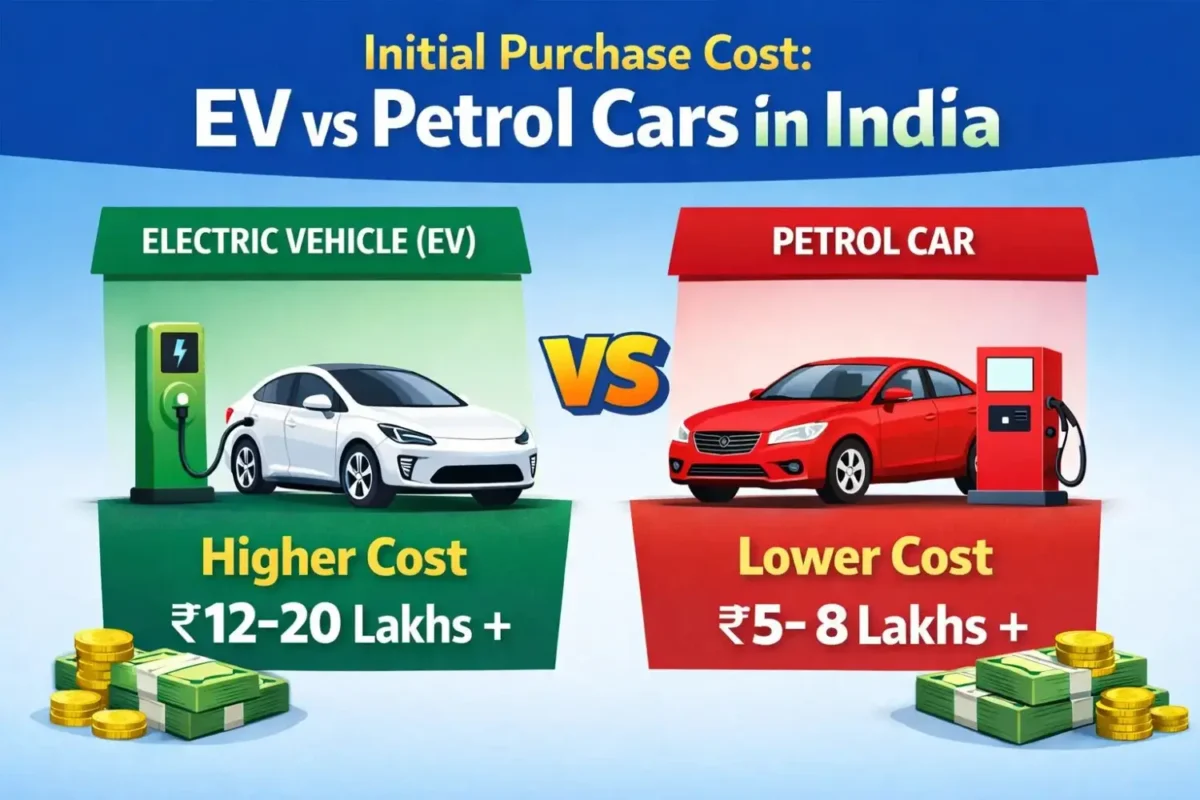
Let’s start with the first shock point—buying price.
Petrol Cars (2026)
Petrol cars still win when it comes to lower upfront cost. You can buy:
- A petrol hatchback from ₹5–6 lakh
- Compact SUVs from ₹8–10 lakh
- Mid-size petrol SUVs from ₹12–15 lakh
Electric Cars (2026)
EV prices have dropped compared to earlier years, but they’re still higher upfront:
- Entry-level EVs start around ₹8–9 lakh
- Popular EV SUVs range between ₹12–18 lakh
Verdict on Purchase Cost
Petrol cars are cheaper to buy initially
EVs require higher upfront investment
But here’s the catch—purchase price is only 30–35% of total ownership cost.
Running Cost Per Km: Where EVs Start Winning
This is where the EV vs Petrol Cost Comparison India 2026 becomes interesting.
Petrol Running Cost
- Average petrol price (India 2026 estimate): ₹100–110/litre
- Average mileage: 15–18 km/l
- Cost per km: ₹6–8 per km
EV Running Cost
- Average electricity cost: ₹7–9/unit
- Average EV consumption: 6–7 km/unit
- Cost per km: ₹1–1.5 per km
Real Difference
If you drive 15,000 km per year:
- Petrol car fuel cost ≈ ₹1–1.2 lakh/year
- EV charging cost ≈ ₹20,000–25,000/year
EV saves ₹70,000–1 lakh every year just on running cost.
Maintenance Cost: Silent Advantage of EVs
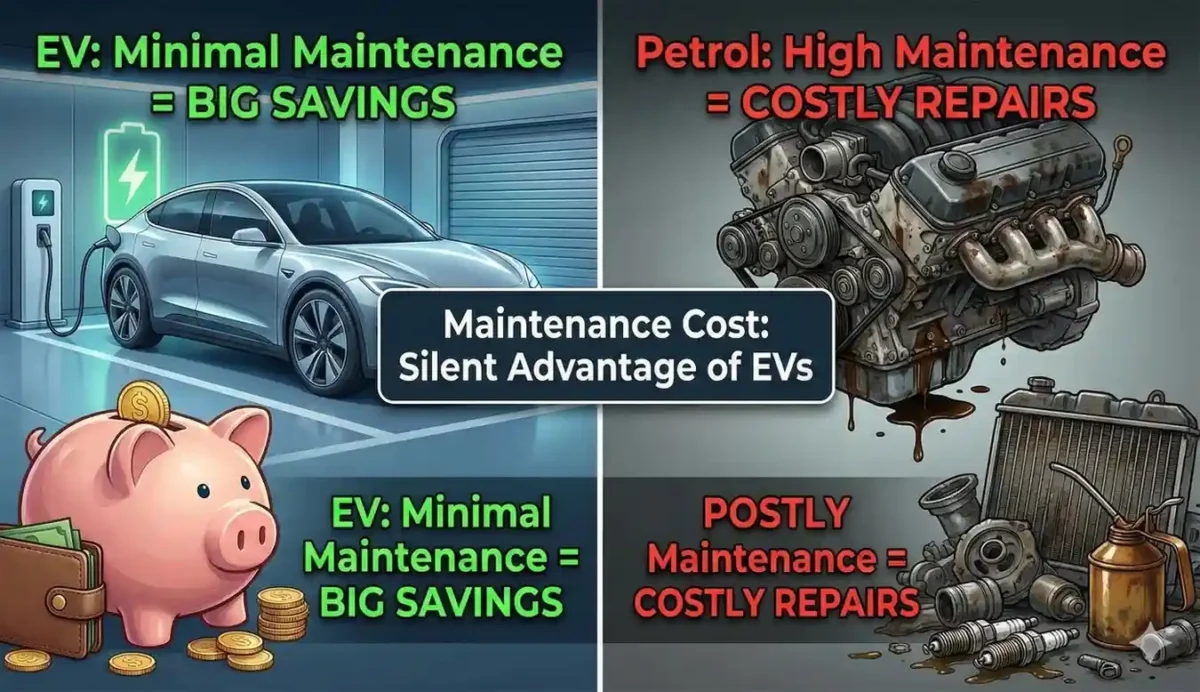
Maintenance is one of the most ignored factors when people compare EV vs petrol cars.
Petrol Car Maintenance
Petrol cars have:
- Engine oil changes
- Filters
- Spark plugs
- Clutch replacements
- Gearbox servicing
Average yearly maintenance cost:
- ₹8,000–15,000, increasing with age
EV Maintenance
EVs don’t have:
- Engine oil
- Clutch
- Exhaust system
What you pay for:
- Tyres
- Brake pads
- Basic software checks
Average yearly maintenance:
- ₹2,000–5,000
Maintenance Verdict
EVs are 60–70% cheaper to maintain than petrol cars.
Charging Cost vs Fuel Cost: Daily Reality Check
Home Charging (EV)
Most EV owners charge at home:
- Overnight charging
- Lowest electricity tariff
- No waiting time
Monthly charging cost (average user):
- ₹1,500–2,000
Petrol Refuelling
- Weekly fuel visits
- Price fluctuations
- Long-term inflation impact
Monthly fuel cost:
- ₹8,000–10,000 (for average usage)
Over 5 years, EV charging can save ₹3–4 lakh compared to petrol fuel.
Battery Life & Replacement Cost: The Big Fear
Many buyers still fear EV battery replacement. Let’s clear that myth.
Battery Warranty in 2026
Most EVs offer:
- 8 years / 1,60,000 km warranty
Real Battery Degradation
- 8–10% degradation after 5–6 years
- Still usable for daily driving
Replacement Cost (if needed)
- ₹3–5 lakh (rare within warranty period)
For most owners, battery replacement is not a real concern within normal ownership.
5-Year Ownership Cost Comparison
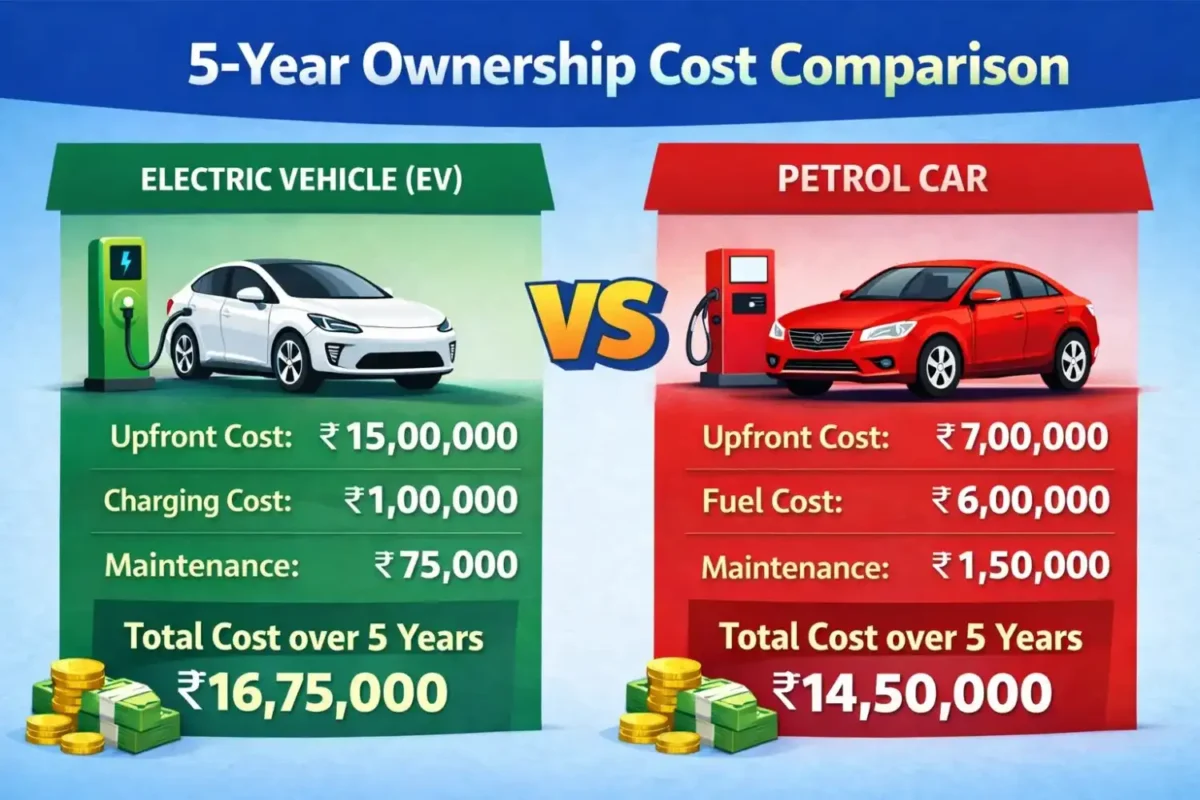
EV vs Petrol Cost Comparison India 2026 Let’s look at a simplified 5-year cost scenario:
Petrol Car (₹10 lakh segment)
- Fuel: ₹5–6 lakh
- Maintenance: ₹60,000
- Total (excluding resale): ₹5.6–6.6 lakh
EV (₹14 lakh segment)
- Charging: ₹1–1.2 lakh
- Maintenance: ₹20,000
- Total: ₹1.2–1.4 lakh
Even with higher purchase price, EVs recover cost through savings.
Resale Value: EV vs Petrol in 2026
Petrol Car Resale
- Strong resale market
- 5-year resale value: 40–50%
EV Resale
- Improving but still evolving
- Battery health affects value
Petrol still has slightly better resale, but the gap is closing fast.
Who Should Buy an EV in 2026?
EVs are perfect if:
- You drive daily in city traffic
- You have home charging access
- You plan to keep the car for 5+ years
- Running cost matters more than badge value
Who Should Still Choose Petrol?
Petrol cars make sense if:
- Your budget is tight upfront
- You drive occasionally
- You live in areas with limited charging
- You frequently take long highway trips
Final Verdict: EV vs Petrol Cost Comparison India 2026
EV vs Petrol Cost Comparison India 2026 So, which one is cheaper to own?
Short-term (1–2 years): Petrol
Medium-term (3–4 years): Almost equal
Long-term (5+ years): EV wins clearly
In 2026, EVs are no longer a “future option.” They are a financially smarter choice for most Indian city buyers. Petrol cars still have relevance, but purely from a cost perspective, the math now strongly favours electric vehicles.
FAQs – SEO + Human Tone (5 Questions)
1. Which is cheaper in 2026, EV or petrol car in India?
According to the EV vs Petrol Cost Comparison India 2026, EVs are cheaper to own in the long term due to lower running and maintenance costs, despite a higher purchase price.
2. What is the running cost difference between EV and petrol cars?
In the EV vs Petrol Cost Comparison India 2026, EVs cost around ₹1–1.5 per km, while petrol cars cost ₹6–8 per km, making EVs much more economical for daily use.
3. Are EV maintenance costs really lower than petrol cars?
Yes. The EV vs Petrol Cost Comparison India 2026 shows EV maintenance costs are 60–70% lower because EVs don’t need engine oil, clutch, or complex servicing.
4. Is battery replacement a big expense for EV owners?
Not usually. Most EVs in India offer 8-year battery warranties, and as highlighted in the EV vs Petrol Cost Comparison India 2026, battery replacement within normal ownership is rare.
5. Should I buy an EV or petrol car in India in 2026?
If you drive regularly and plan long-term ownership, the EV vs Petrol Cost Comparison India 2026 suggests EVs are the smarter financial choice. Petrol cars suit low-usage or budget-focused buyers.
Conclusion
The EV vs Petrol Cost Comparison India 2026 clearly shows one thing—running and maintenance costs matter more than sticker price. While petrol cars may feel cheaper initially, EVs quietly save money every single day you drive.
If you think long-term, EVs are no longer expensive—they’re simply better planned investments.