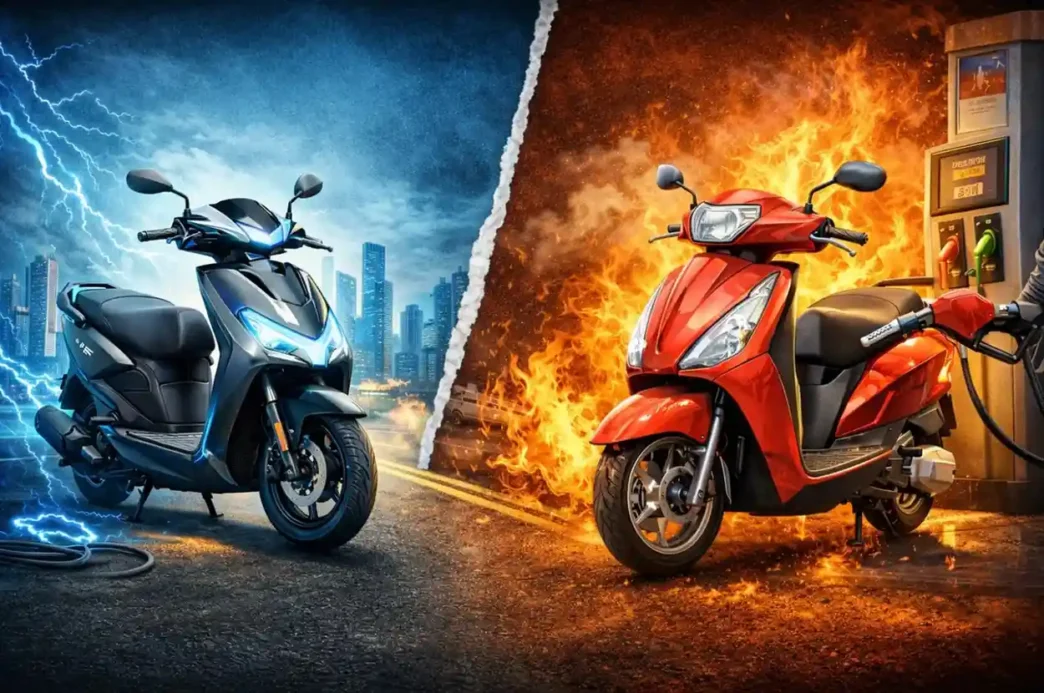
Every time you stop at a petrol pump and watch the numbers climb faster than your heartbeat, one question hits your mind hard:
“Am I still doing the right thing by riding a petrol scooter?”
Welcome to the real debate of modern India —
Electric Scooter vs. Petrol Scooter.
This is no longer a future question. It’s a right now decision. College students, office commuters, delivery riders, and family users—everyone is rethinking their ride. And no, this isn’t about trends or hype. It’s about money, convenience, sanity, and the future.
So let’s break it down—honestly, clearly, and with real-life logic.
Why This Debate Matters More Than Ever
Five years ago, electric scooters were seen as “slow,” “boring,” or “not reliable.”
Today? That perception is completely flipped.
- Petrol prices keep rising
- Traffic is getting worse
- Maintenance costs are exploding
- People want silent, smooth, low-cost rides
This is exactly where the electric scooter vs. petrol scooter debate becomes unavoidable.
You’re not just choosing a scooter anymore.
You’re choosing how much you’ll spend every month, how peaceful your rides will be, and how future-ready you want to be.
Upfront Cost: Cheap Today vs Smart Tomorrow
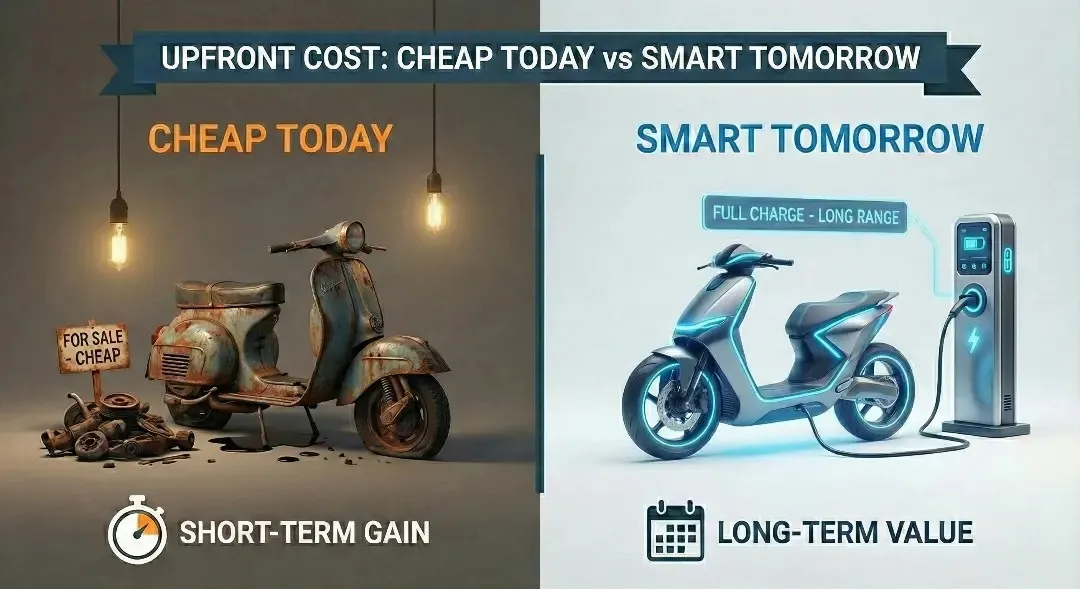
Let’s start with the first thing everyone looks at—price.
Petrol Scooter Cost
A decent petrol scooter in India usually costs:
- ₹75,000 to ₹1.10 lakh (on-road)
At first glance, it looks affordable. That’s why people still buy it.
Electric Scooter Cost
Electric scooters usually start from:
- ₹90,000 and can go up to ₹1.50 lakh
Yes, electric scooters look expensive at purchase.
But here’s the twist.
Purchase price is not the real cost. Running cost is.
And this is where petrol scooters quietly drain your wallet.
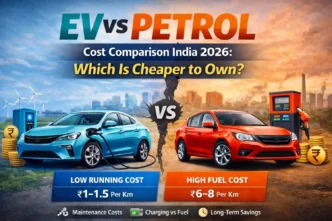
Running Cost: This Is Where Petrol Loses Badly
This is the heart of the electric scooter vs. petrol scooter comparison.
Petrol Scooter Running Cost
Let’s do simple math:
- Average mileage: 40–45 km/l
- Petrol price: ₹100+ per litre
- Cost per km: ₹2.5 – ₹3
Now multiply that monthly:
- 800 km per month = ₹2,000+ fuel cost
And that’s every single month.
Electric Scooter Running Cost
- Average cost per full charge: ₹20–₹30
- Range: 80–120 km
- Cost per km: ₹0.20 – ₹0.30
That’s not a typo.
Electric scooters are nearly 10x cheaper per km.
Over one year, electric scooters save ₹20,000–₹30,000 easily.
Suddenly, that higher price doesn’t look scary anymore, right?
Maintenance: Silent Winner Here
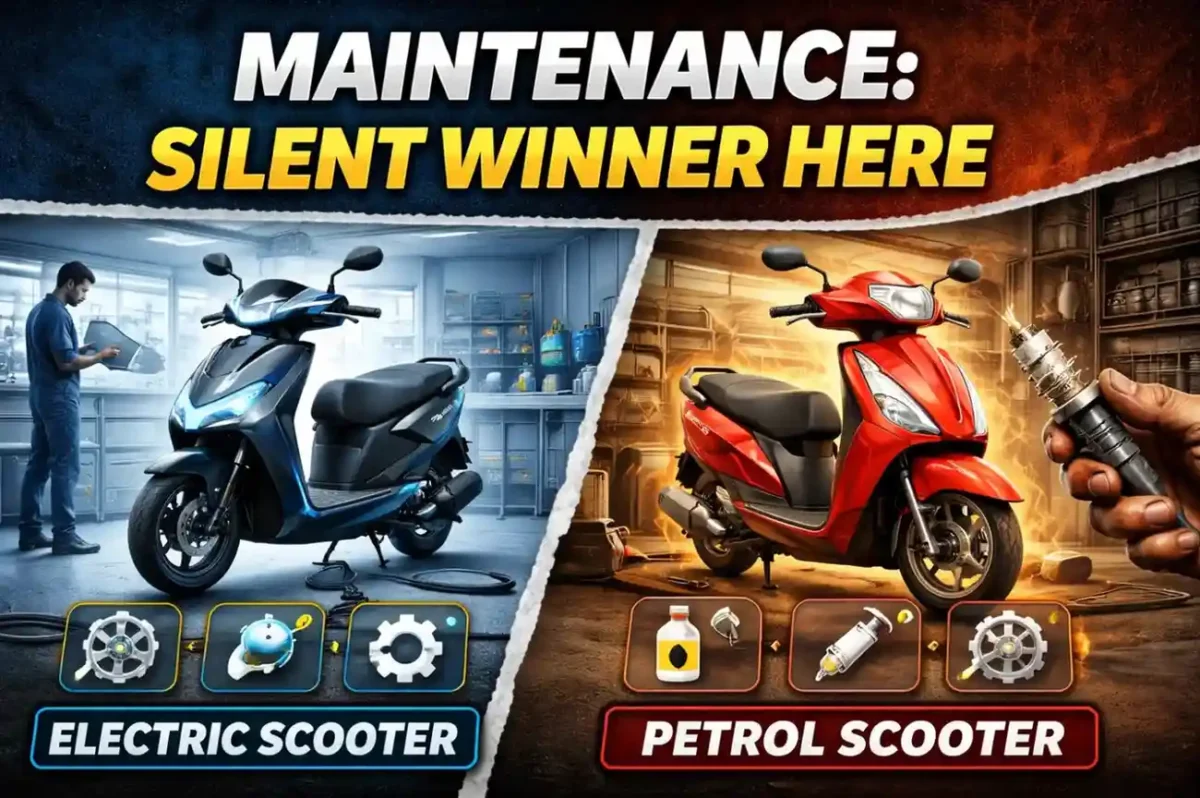
Petrol scooters are mechanical beasts.
Electric scooters are digital machines.
Petrol Scooter Maintenance
You deal with:
- Engine oil changes
- Spark plugs
- Air filters
- Clutch problems
- Exhaust issues
Even if nothing breaks, regular servicing costs:
- ₹3,000–₹5,000 per year
Electric Scooter Maintenance
Electric scooters have:
- No engine oil
- No clutch
- No gearbox
Maintenance usually means:
- Brake check
- Tyre pressure
- Software update
Annual cost?
₹500–₹1,000 max
In the electric scooter vs. petrol scooter battle, maintenance is a clear knockout.
Riding Experience: Silence Feels Premium
This part is underrated but super important.
Petrol Scooter Ride Feel
- Engine noise
- Vibrations at high speed
- Heat during traffic jams
It’s familiar, yes—but not peaceful.
Electric Scooter Ride Feel
- Zero noise
- Instant pickup
- No vibration
- Smooth glide in traffic
Once you ride an electric scooter for a week, petrol scooters start feeling… old.
That instant torque at traffic signals?
It’s addictive.
Daily City Use: Electric Scooters Are Built for This
Indian cities are crowded, slow, and chaotic.
And guess what?
Electric scooters love city traffic.
- No gear changes
- Easy overtakes
- Regenerative braking in traffic
- Smooth stop-and-go riding
For office commuting, grocery runs, or college rides, the electric scooter vs. petrol scooter debate ends quickly.
Electric scooters are simply more comfortable for daily urban life.
Charging Anxiety: Is It Still a Problem?
This is the biggest fear people have.
Let’s clear it up.
Reality of Electric Scooter Charging
- Most people ride less than 40 km per day
- Modern electric scooters offer 80–120 km range
- Charging overnight at home is enough
If you have:
- A home plug point
- Or removable battery
You’re sorted.
Public charging stations are increasing, but honestly—most users don’t even need them.
Charging anxiety is more fear than fact now.
Speed & Performance: No More “Slow Scooter” Tag
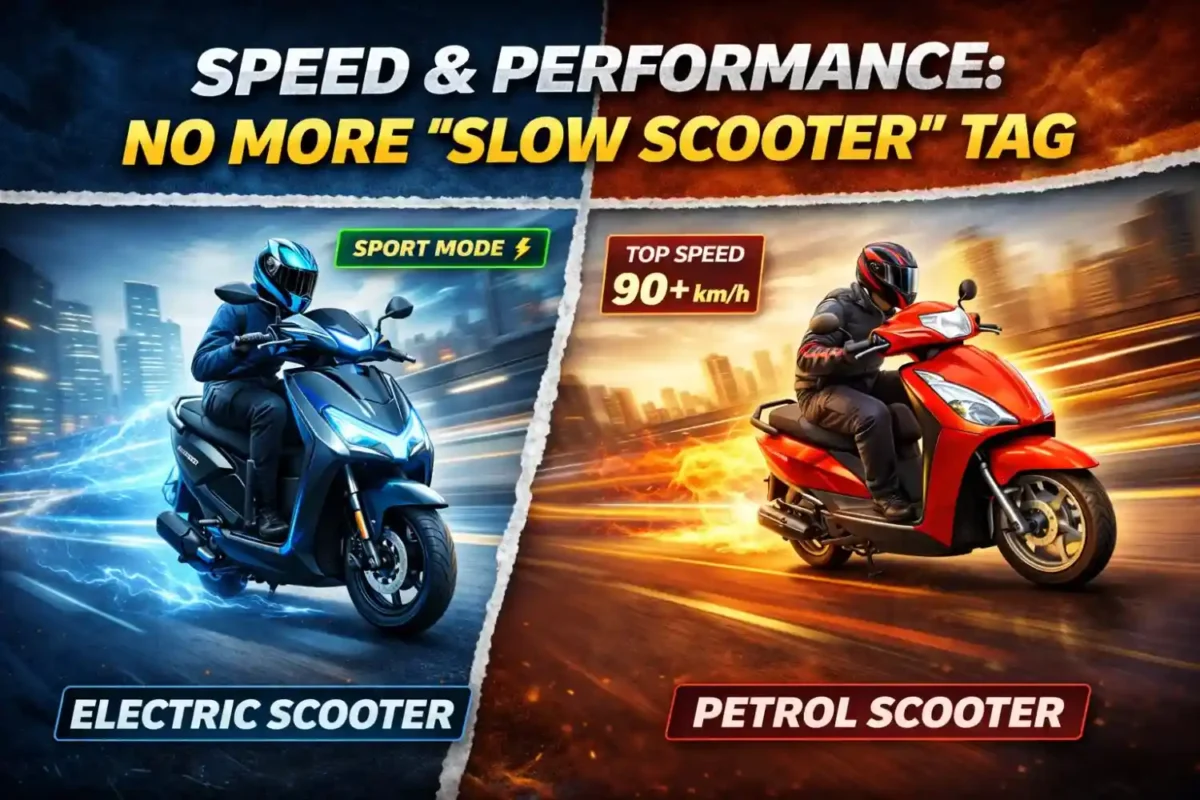
Earlier electric scooters were slow.
Not anymore.
Today’s electric scooters offer:
- Top speed: 80–100 km/h
- Sport modes
- Quick acceleration
In city traffic, electric scooters often feel faster than petrol ones.
So performance?
No longer an issue in the electric scooter vs. petrol scooter comparison.
Environment & Future Value
Let’s talk about long-term thinking.
Petrol scooters:
- Produce emissions
- Will face stricter rules
- Lower resale value in future
Electric scooters:
- Zero tailpipe emissions
- Government support
- Better future resale
India is clearly moving towards EVs.
Buying petrol today might feel normal—but five years later, electric scooters will feel like the obvious choice.
Subsidies & Government Support
This is a bonus point electric scooters enjoy.
- EV subsidies
- Road tax benefits (in many states)
- Lower registration costs
These hidden savings reduce the actual price difference even more.
Who Should Still Buy a Petrol Scooter?
Let’s be fair.
Petrol scooters still make sense if:
- You travel very long distances daily (150+ km)
- Charging access is impossible
- You live in extremely remote areas
But for 90% of city riders, electric scooters fit perfectly.
Electric Scooter vs Petrol Scooter: The Real Verdict
Electric Scooter vs Petrol Scooter Let’s sum it up simply.
- Want lower monthly cost? → Electric scooter
- Want smooth, silent rides? → Electric scooter
- Want future-ready choice? → Electric scooter
- Want cheaper upfront cost only? → Petrol scooter
This isn’t about trends.
It’s about logic.
Petrol scooters are becoming expensive habits.
Electric scooters are becoming smart investments.
Final Thoughts: One Is Smart, One Is Expensive
The electric scooter vs. petrol scooter debate isn’t emotional anymore.
It’s mathematical.
And math clearly says:
Electric scooters save money, effort, and stress.
Petrol scooters?
They still work—but they slowly drain your pocket.
If you’re buying a scooter today and thinking about tomorrow, the answer is already clear.
The future is quiet.
The future is electric.
Frequently Asked Questions
1. Is an electric scooter really better than a petrol scooter for daily use?
Yes, for most city riders, the electric scooter vs. petrol scooter comparison clearly favors electric scooters. They’re cheaper to run, easier to maintain, and much smoother in traffic. If your daily ride is under 60–80 km, an electric scooter fits perfectly into everyday life.
2. Which one is cheaper in the long run: an electric scooter or a petrol scooter?
Without a doubt, electric scooters win here. In the electric scooter vs. petrol scooter debate, petrol scooters may look cheaper at first, but fuel and maintenance costs add up fast. Over a few years, electric scooters can save tens of thousands of rupees.
3. Do electric scooters have enough range for Indian city riding?
Absolutely. Most modern electric scooters offer an 80–120 km range, which is more than enough for daily commuting. When comparing electric scooters vs. petrol scooters, range is no longer a big disadvantage for electric scooters, especially for urban users.
4. Is charging an electric scooter difficult compared to refueling petrol?
Not really. Charging an electric scooter at home is actually more convenient than visiting a petrol pump again and again. In the electric scooter vs. petrol scooter discussion, charging anxiety is mostly a myth for regular city riders.
5. Should I still buy a petrol scooter in 2026?
A petrol scooter only makes sense if you travel very long distances daily or don’t have access to charging. Otherwise, in the electric scooter vs. petrol scooter choice, electric scooters are the smarter, future-ready option for most people today.